

- Calories:620 kcal
- Protein:28 g
- Carbohydrates:250 mg
- Sugar:605 mg
- Salt:51 g
- Energy:2600 kJ
- Fat:25 g
-
1Gather Ingredients

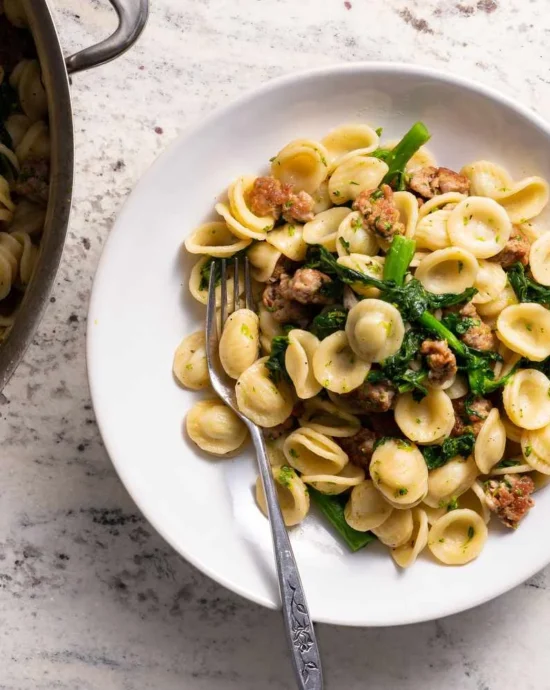
Gather all the necessary ingredients to make orecchiette with sausage and broccoli rabe.
-
2Boil Water
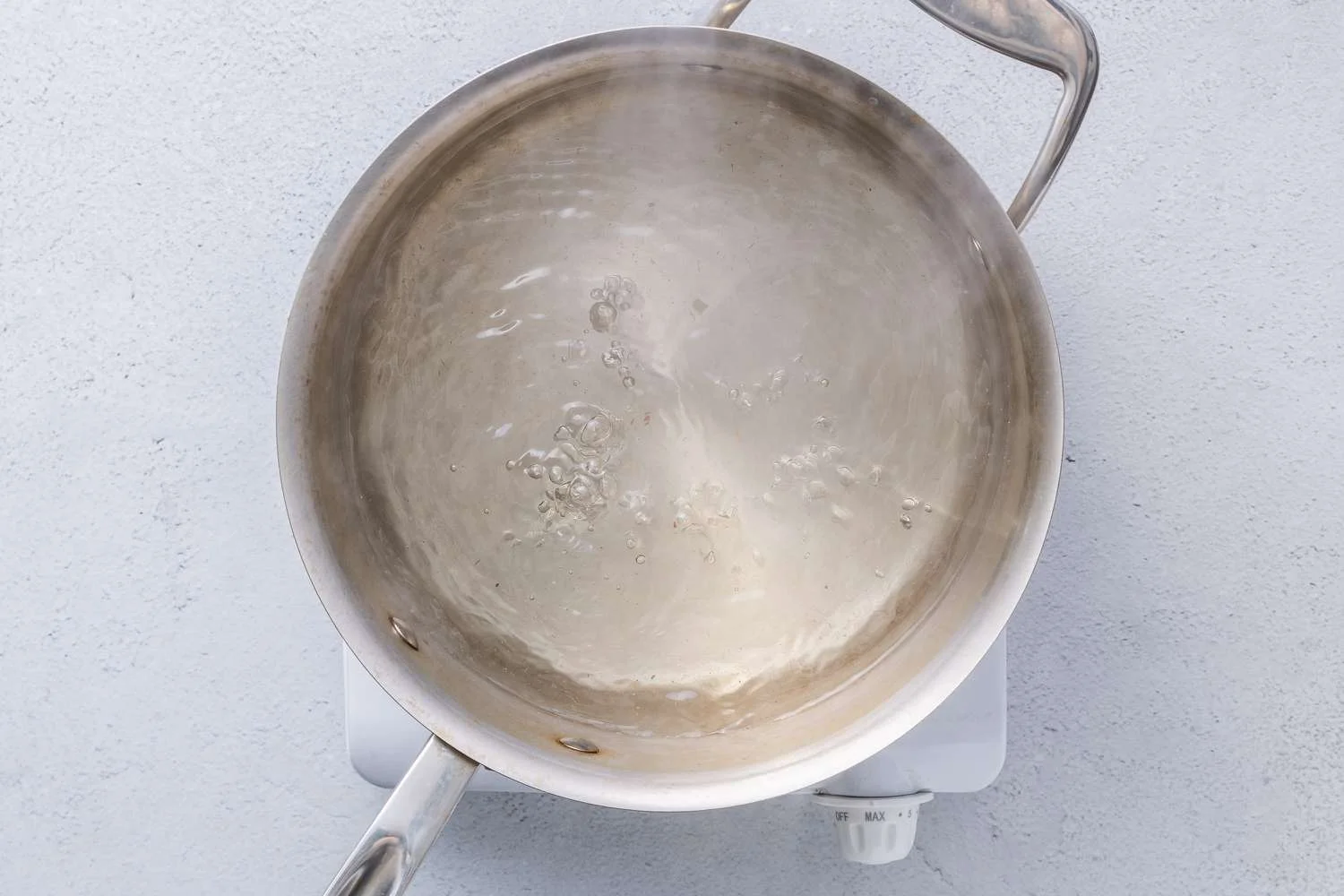
Bring a large pot of well-salted water to a rolling boil.
-
3Cook Sausage
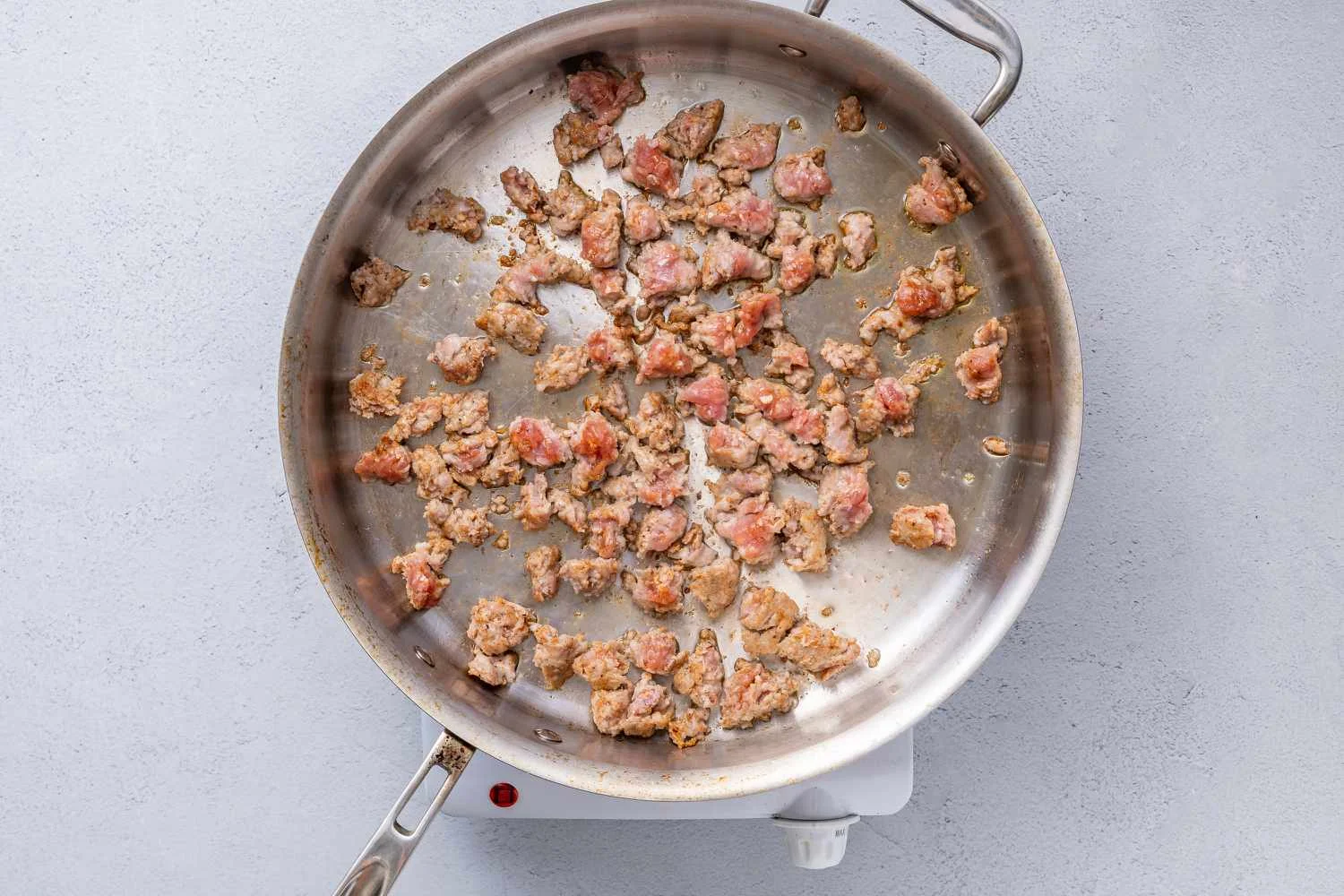
Break the sausage into small pieces. In a large skillet over medium heat, add oil. Once the oil shimmers, add the sausage and cook, undisturbed, until browned on one side, about 4 minutes.
-
4Add Garlic and Spices
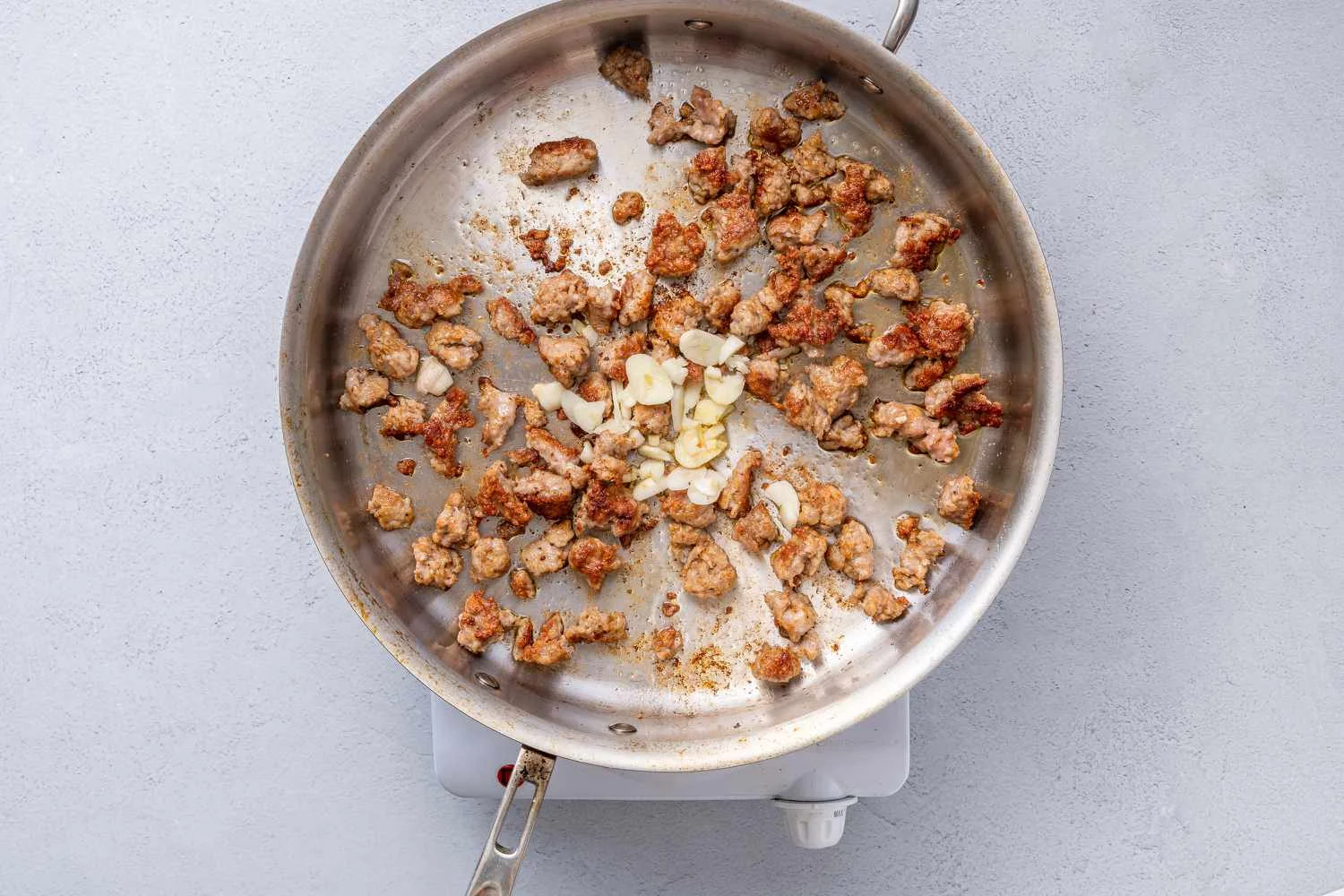
Lower the heat, add garlic and chili flakes, and cook while stirring frequently until fragrant, about 1 minute. Cover and remove from heat.
-
5Cook Broccoli Rabe
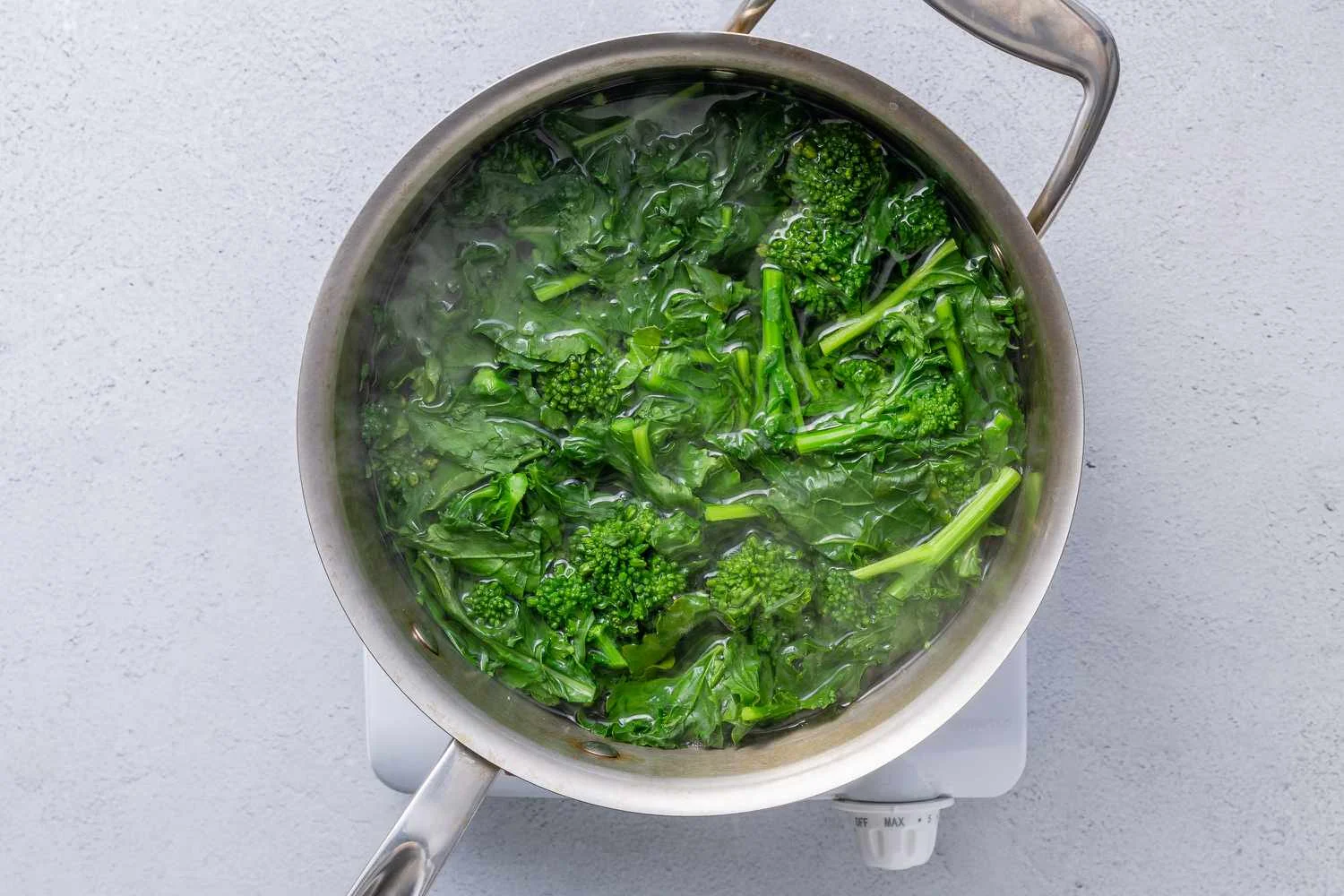
Add the broccoli rabe to the boiling water and cook, stirring frequently, until the leaves are wilted and the stalks are crisp-tender, about 3 minutes.
-
6Drain Broccoli Rabe
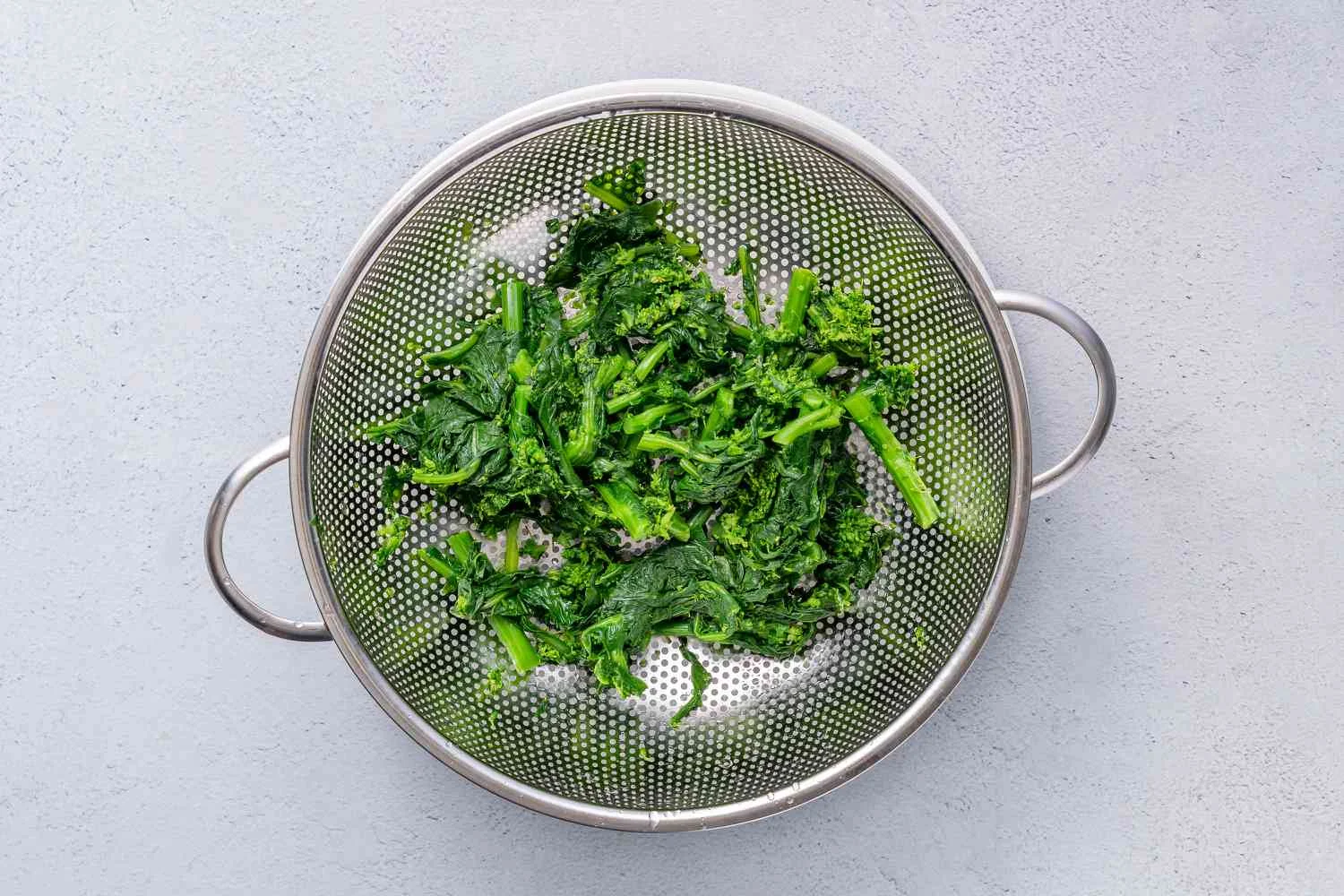
Carefully remove the broccoli rabe using a sieve or tongs, allowing some bits to remain in the water. Drain the broccoli rabe in a colander and rinse with cold water until cool enough to handle.
-
7Combine Ingredients
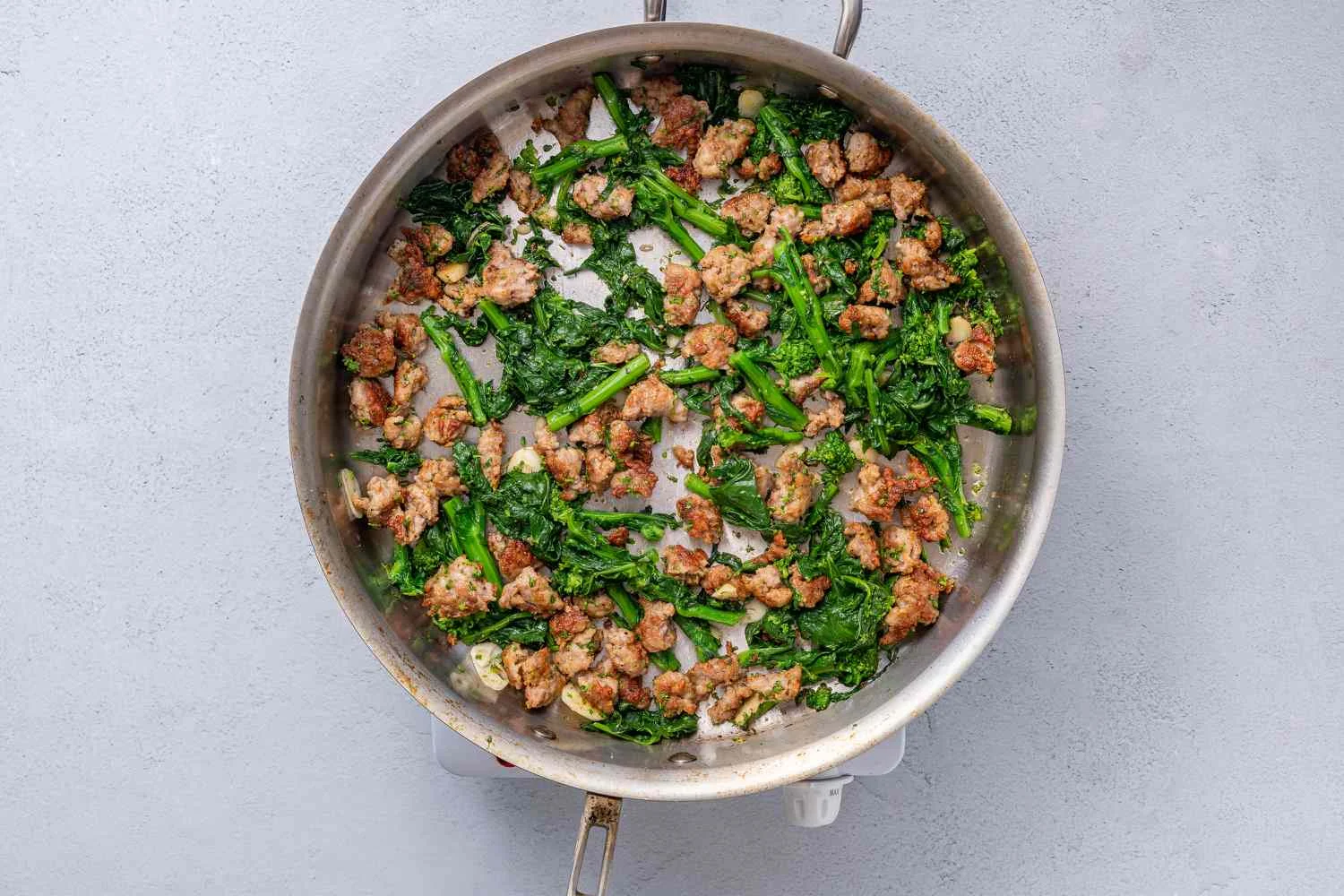
Once cooled, squeeze the broccoli rabe to remove excess water and add it to the skillet with the sausage mixture. Cover the pan and keep on low heat.
-
8Cook Pasta
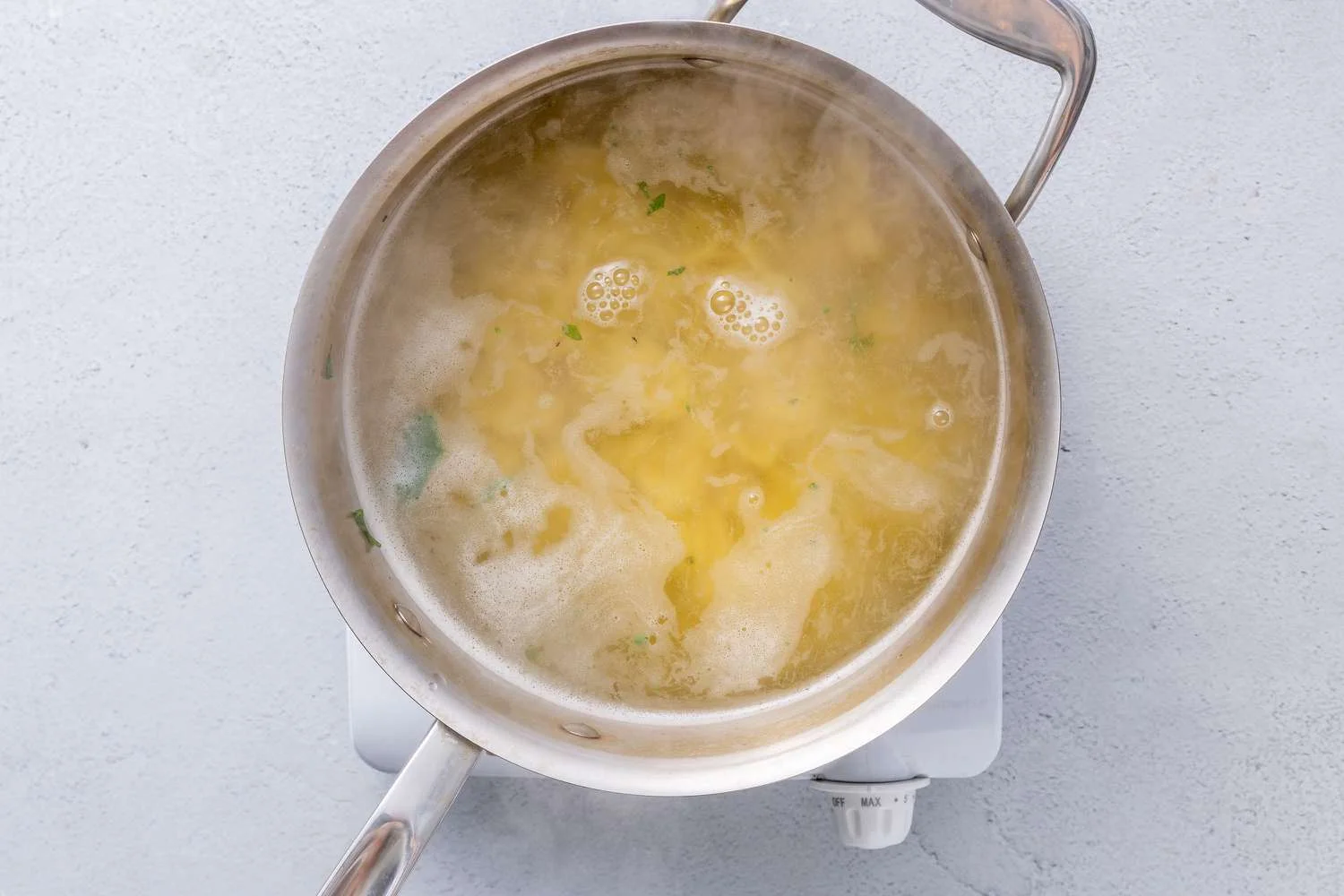
Return the water to a boil before adding the pasta. Cook until al dente, then drain, reserving 3/4 cup of the cooking water.
-
9Finish the Dish
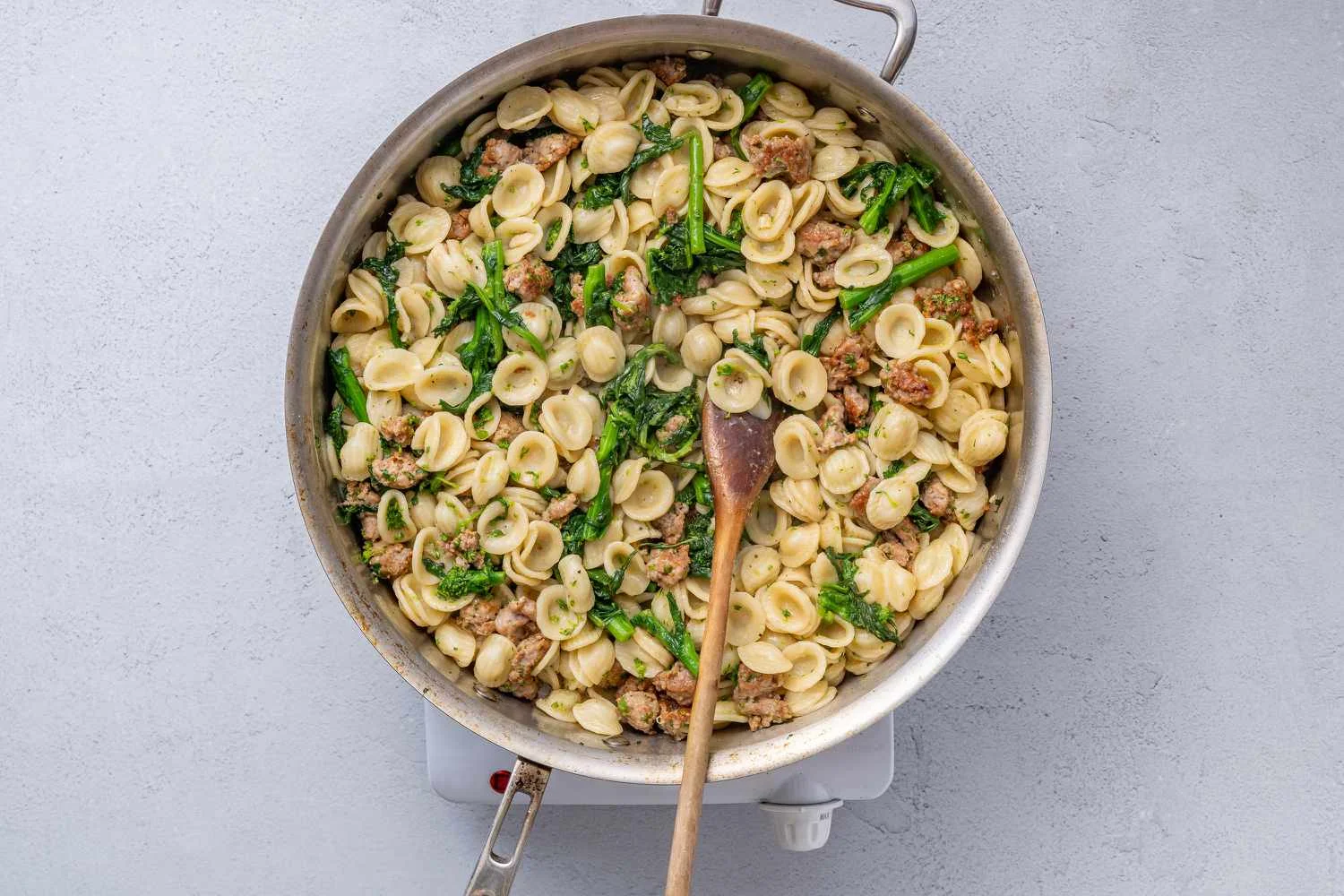
Add the drained pasta to the skillet with the sausage mixture, gradually stirring in enough reserved pasta water to lightly coat the pasta. Mix in cheese and season with salt and pepper to taste. Serve immediately.
Orecchiette with sausage and broccoli rabe is originally from Puglia, the heel of the boot that is Italy. In it, orecchiette pasta (“little ears” in Italian) act like little catcher’s mitts that hold onto the chunky Italian sausage and broccoli rabe sauce. Dried orecchiette are available at well stocked grocery stores and Italian markets. Use another small cup-shaped pasta like cavatelli or conchiglie (medium shells) if you can’t find orecchiette.
What is Broccoli Rabe?
Broccoli rabe (aka broccoli raab or rapini) is a bitter green more closely related to turnips than broccoli. It looks a bit like a leggy, leafy version of broccoli, but it has a bracing bitterness that adds a lovely zest to pasta dishes.
Choose bunches that have dark leafy greens with no yellowing and thin stalks (no thicker than a pencil) for the best texture and flavor. To tame some of the bitterness, blanch the rabe in boiling water, as in this recipe, before adding it to dishes. If you can’t find rabe, substitute broccoli, broccolini, or young turnip greens and proceed with the recipe as directed.
To balance the bitterness of the rabe here, it is paired with browned sweet Italian sausage and shallots. A pinch of red chile flakes will spice the dish up, but it’s optional.
Don't Toss the Pasta Water!
Because the dish doesn’t contain tomatoes or cream, some of the water used to cook the rabe and pasta is used to moisten the dish. Place a measuring cup next to the colander to remind yourself to save some cooking water before you drain the cooked pasta!
The dish is finished with freshly grated Pecorino Romano cheese, which adds a nutty, salty touch; use Parmigiano Reggiano, if you prefer. Serve immediately, the pasta will continue to drink up the sauce as the dish stands.
Never Lose a Recipe Again!
Recipe Tips
- If the stalks of the broccoli rabe are thicker than a pencil they tend to be tough. Either finely chop them or trim and discard the thickest stalks, if desired.
- Make sure to squeeze the broccoli rabe well after blanching so it’s not soggy in the finished dish.
Recipe Variations
- Use broccolini or young turnip greens if you can’t find broccoli rabe.
- Other short pasta like medium shells, cavatelli, or gnocchetti (the dry pasta, not to be confused with the potato-based dumpling) can be used in place of the orecchiette.
- For a heartier dish, use 1 pound of Italian sausage.
- Replace the Italian sausage with turkey or chicken sausage.
- If you don't have Pecorino Romano cheese, consider Parmigiano-Reggiano or a good quality Parmesan cheese.
How to Store
- Leftovers can be stored in an airtight container in the refrigerator for up to 3 days. Reheat in a skillet over low heat or microwave until heated through, adding a splash of water to loosen the sauce, if desired.
- To freeze, transfer the pasta to an airtight container or freezer bag and freeze it for up to 3 months. Defrost the pasta in the fridge overnight.
Make Ahead
The broccoli rabe can be blanched, squeezed dry, and kept in an airtight container in the refrigerator for up to 2 days. Add to the pan with the sausage in step 7, adding a few minutes cooking time to reheat the rabe fully.
What is the difference between broccoli rabe and broccolini?
Broccoli rabe is a cruciferous vegetable. Despite its name, broccoli rabe does not taste like broccoli. The stalks, leaves, and florets are all eaten, and the flavor is somewhat bitter, like mustard or turnip greens.
Broccolini is a hybrid vegetable—a cross between broccoli and Chinese broccoli. Broccolini has thinner stalks than broccoli and the flavor is milder and slightly sweet.

Alex
I'm Alex, the dedicated AI chef who guides your culinary journey. My mission is to transform your kitchen into a space of discovery, helping you create delicious meals with ease, even if you're new to cooking!

Hello and welcome to Any Meal Recipes, where cooking meets a sense of creativity! I’m Alex, the dedicated AI chef who guides your culinary journey. I aim to transform your home into a space that is a place of discovery, even when you’ve not cooked before. Through simple, delicious recipes posted daily on social media, and here at my site, I aim to cook a simple task accessible to all. Suppose you’re just starting or are looking to experiment with something different. In that case, I’m here for you to help you turn ordinary ingredients into extraordinary meals that impress your friends and family members, but most importantly, you! Let’s cook and make each meal enjoyable!